

Choosing Positive Pressure or Negative Pressure for Crystal Particle Pneumatic Conveying? How to Dis
When it comes to transporting crystal particles via pneumatic conveying systems, the choice between positive pressure and negative pressure methods is a critical decision that impacts operational efficiency, system reliability, and overall cost-effectiveness. Understanding the fundamental differences between these two approaches is essential for selecting the most suitable solution for specific industrial applications. This article provides a comprehensive overview of the key factors to consider when choosing between positive and negative pressure systems for crystal particle transport, along with practical guidance on how to distinguish between them based on operational requirements and material characteristics.

Key Differences Between Positive and Negative Pressure Pneumatic Conveying
Positive pressure pneumatic conveying systems operate by blowing air or gas into the conveying line, creating a pressure higher than the ambient air pressure. This method is often preferred for applications involving abrasive or corrosive materials, as it minimizes material degradation and reduces the risk of product contamination. The high-pressure environment also enables the system to handle longer distances and more complex layouts, making it suitable for large-scale industrial operations. In contrast, negative pressure systems draw air or gas from the conveying line, creating a vacuum that pulls material into the system. This approach is typically used for applications where the material is light and non-abrasive, and where the system needs to operate in a clean environment. Negative pressure systems are generally more energy-efficient for short-distance transport and are easier to install in confined spaces.

How to Distinguish Between Positive and Negative Pressure Systems
Several key characteristics can help differentiate between positive and negative pressure pneumatic conveying systems. First, consider the pressure differential: positive pressure systems maintain a pressure above atmospheric, while negative pressure systems maintain a pressure below atmospheric. Second, observe the direction of material flow: in positive pressure systems, material is pushed through the line by the pressurized air, whereas in negative pressure systems, material is pulled into the system by the vacuum. Third, evaluate the system's energy consumption: positive pressure systems typically require more energy to maintain the high pressure, while negative pressure systems are more energy-efficient for short distances. Fourth, assess the material properties: positive pressure systems are better suited for abrasive or corrosive materials, while negative pressure systems are ideal for light, non-abrasive materials. By carefully evaluating these factors, industrial operators can make an informed decision about which system is best suited for their crystal particle transport needs.

Factors to Consider When Selecting a Pneumatic Conveying System for Crystal Particles
When choosing between positive and negative pressure systems for crystal particle transport, several factors must be taken into account. The first factor is the material characteristics, including particle size, density, and abrasiveness. For example, if the crystal particles are small and abrasive, a positive pressure system with robust components may be necessary to prevent wear and tear. Conversely, if the particles are light and non-abrasive, a negative pressure system may be sufficient. The second factor is the distance and layout of the conveying line. Positive pressure systems are better suited for longer distances and complex layouts, while negative pressure systems are more suitable for short distances and simple setups. The third factor is the required flow rate and throughput. Positive pressure systems can handle higher flow rates and throughput, making them ideal for high-volume applications. The fourth factor is the environmental considerations, such as the need for a clean or dust-free environment. Negative pressure systems are often preferred in such cases to prevent dust from escaping into the surrounding air. By considering these factors, industrial operators can select the most appropriate pneumatic conveying system for their specific crystal particle transport requirements.
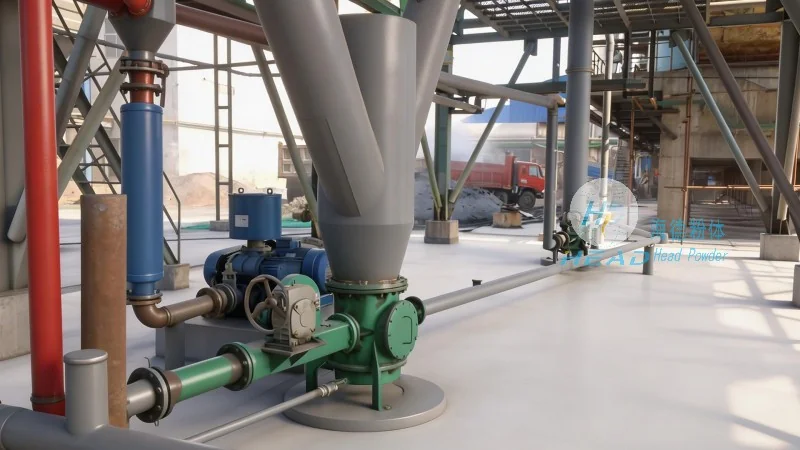
About Shandong HeadPowder Engineering Co., Ltd.
Shandong HeadPowder Engineering Co., Ltd., commonly known as HeadPowder, is a leading manufacturer and supplier of pneumatic conveying systems and related equipment. With headquarters in Shandong, China, HeadPowder specializes in designing and manufacturing customized solutions for various industrial applications, including crystal particle transport. The company's team of experienced engineers and technicians utilizes advanced technology and rigorous quality control processes to ensure that all products meet the highest standards of performance and reliability. HeadPowder's commitment to innovation and customer satisfaction has made it a trusted partner for businesses in the chemical, pharmaceutical, and food industries, among others. The company's products are known for their durability, efficiency, and ability to handle a wide range of materials, including abrasive and corrosive substances. By leveraging its expertise and state-of-the-art facilities, HeadPowder provides comprehensive solutions that enhance operational efficiency and reduce costs for its clients.