

What Are the Methods for Rubber Granule Conveying?
When it comes to the efficient handling and transportation of rubber granules, selecting the right conveying method is crucial for optimizing workflow, minimizing downtime, and ensuring product integrity. Rubber granules are widely used in various industries, including sports surfaces, flooring, and manufacturing, making reliable and effective transport solutions essential. This article explores the primary methods for rubber granule conveying, highlighting the key factors to consider when choosing the most suitable option for your application.

1. Belt Conveyors for Rubber Granule Transport
Belt conveyors are among the most common and versatile solutions for rubber granule conveying. These systems utilize a continuous loop of material (typically rubber or PVC) that moves the granules from one point to another through friction. The design can be customized to accommodate different granule sizes, shapes, and quantities, making it suitable for both small-scale and large-scale operations. Belt conveyors are particularly effective for horizontal or slightly inclined transport, as they can handle a wide range of loads without causing excessive wear or degradation to the rubber granules. The smooth surface of the conveyor belt reduces friction, preventing the granules from sticking or being damaged during transit. Additionally, belt conveyors can be equipped with accessories such as idlers, pulleys, and tensioning devices to enhance performance and longevity. For example, a headpowder belt conveyor system may feature a robust design with reinforced edges to withstand the abrasive nature of rubber granules, ensuring consistent operation over extended periods. The company, Shandong HeadPowder Engineering Co., Ltd., specializes in manufacturing high-quality belt conveyor systems tailored to the unique demands of rubber granule handling, providing durable and efficient solutions for industrial applications.
2. Screw Conveyors for Rubber Granule Handling
Screw conveyors, also known as auger conveyors, are another popular method for transporting rubber granules. These systems consist of a rotating helical screw blade enclosed within a tube or trough, which moves the material forward through the rotation of the screw. Screw conveyors are ideal for vertical or inclined transport, as they can lift granules to elevated levels while maintaining a controlled flow rate. The design of the screw (e.g., pitch, diameter, and material) can be adjusted to optimize the conveying capacity and prevent clogging, which is a common issue with fine or sticky granules. The smooth interior of the screw and trough reduces friction and wear, ensuring that the rubber granules remain intact during transport. Screw conveyors are particularly effective for applications where space is limited or where a compact design is required. For instance, a headpowder screw conveyor may be equipped with a variable-speed drive to regulate the flow of granules, allowing for precise control over the conveying rate. The company, Shandong HeadPowder Engineering Co., Ltd., offers screw conveyor solutions that are engineered to handle the specific characteristics of rubber granules, ensuring reliable performance and minimal maintenance.

3. Pneumatic Conveying Systems for Rubber Granules
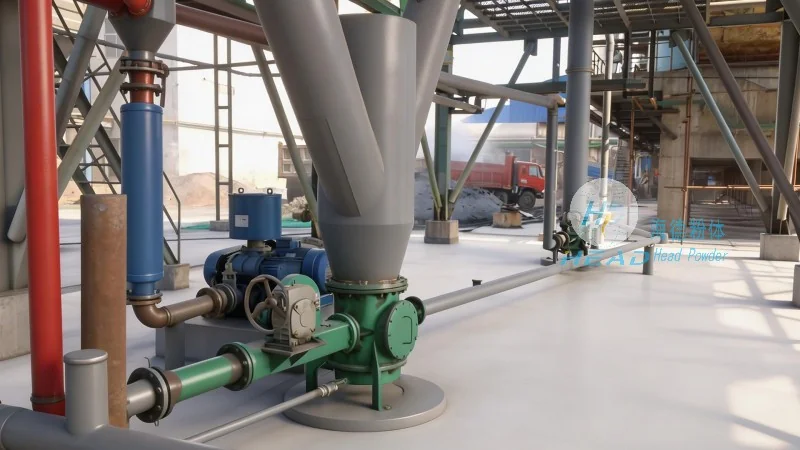
Pneumatic conveying systems use air or gas to transport rubber granules through a pipeline network. These systems are particularly useful for applications requiring long-distance transport or where the granules need to be transferred through multiple points without the need for mechanical contact. Pneumatic conveyors can be classified into two main types: dilute-phase and dense-phase systems. Dilute-phase systems use high-velocity air to move the granules in a suspended state, while dense-phase systems use lower air velocities to create a more concentrated flow of material. The choice between these systems depends on factors such as the distance to be covered, the volume of granules, and the need for gentle handling. Pneumatic conveying is often preferred for handling fine or dusty rubber granules, as it minimizes the risk of contamination and product degradation. The system typically includes components such as a blower, hopper, and pipeline, which work together to ensure efficient transport. For example, a headpowder pneumatic conveying system may feature a high-efficiency blower and a specially designed hopper to prevent material buildup and ensure consistent flow. The company, Shandong HeadPowder Engineering Co., Ltd., specializes in designing and manufacturing pneumatic conveying systems that are tailored to the unique requirements of rubber granule transport, providing reliable and low-maintenance solutions.
4. Vibrating Conveyors for Rubber Granule Transport
Vibrating conveyors utilize vibrations to move rubber granules along a trough or conveyor bed. These systems are particularly effective for handling sticky or cohesive granules, as the vibrations help to break up clumps and maintain a consistent flow. The conveyor consists of a trough supported by vibration motors or a vibrating mechanism, which causes the granules to move forward through the motion. Vibrating conveyors are ideal for applications where gentle handling is required, as they minimize the risk of product damage or degradation. The design of the conveyor can be customized to accommodate different granule sizes and shapes, with adjustable vibration frequencies and amplitudes to optimize performance. For instance, a headpowder vibrating conveyor may be equipped with a variable-frequency drive to control the vibration intensity, allowing for precise adjustment based on the material being conveyed. The company, Shandong HeadPowder Engineering Co., Ltd., offers vibrating conveyor solutions that are engineered to handle the specific challenges of rubber granule transport, ensuring reliable and efficient operation.
5. Hydraulic Conveyors for Rubber Granule Handling
Hydraulic conveyors use fluid pressure to transport rubber granules through a pipeline or channel. These systems are particularly useful for applications where long-distance transport is required or where the granules need to be moved through obstacles or changes in elevation. The system typically includes a hydraulic pump, reservoir, and pipeline, which work together to create a pressure-driven flow of the granules. Hydraulic conveyors are often preferred for handling abrasive or heavy rubber granules, as they can withstand the high pressures and stresses associated with such materials. The design of the system can be customized to accommodate different granule sizes and flow rates, with adjustable pressure controls to optimize performance. For example, a headpowder hydraulic conveyor may feature a robust pump and a reinforced pipeline to handle the abrasive nature of rubber granules, ensuring consistent operation over extended periods. The company, Shandong HeadPowder Engineering Co., Ltd., specializes in manufacturing hydraulic conveyor systems tailored to the unique demands of rubber granule handling, providing durable and efficient solutions for industrial applications.