

Working Principle and Features of Positive Pressure Dense Phase Material Conveying Lines
Positive pressure dense phase material conveying lines are advanced industrial equipment designed to transport bulk materials efficiently and safely. These systems are widely used in various industries, including chemical, pharmaceutical, food processing, and mining, due to their ability to handle a wide range of materials with minimal degradation and loss. The core technology behind these lines involves creating a positive pressure environment within the conveying pipeline, which allows for the movement of materials in a dense, slurry-like state rather than as individual particles or in a pneumatic (air-assisted) mode. Developed by Shandong HeadPowder Engineering Co., Ltd. (headpowder), these systems are engineered to meet the demanding requirements of modern industrial operations.
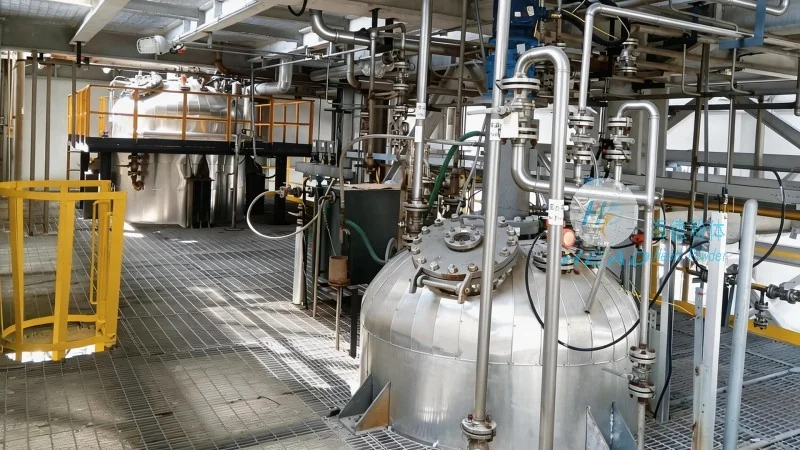
Working Principle of Positive Pressure Dense Phase Material Conveying Lines
The working principle of a positive pressure dense phase material conveying line is centered on the generation of a high-pressure air or gas stream that propels the material through the pipeline. Unlike traditional pneumatic conveying systems that rely on negative pressure or suction, positive pressure systems maintain an overpressure condition in the conveying line. This is achieved by using a positive displacement blower or compressor that supplies compressed air or gas at a pressure higher than the ambient air pressure. The material is fed into the pipeline at a controlled rate, often in a dry or slightly moist form, and is mixed with the pressurized air or gas. The resulting mixture forms a dense, homogeneous slurry that flows through the pipeline under the influence of the pressure gradient. The high pressure ensures that the material particles are closely packed, reducing the risk of segregation and ensuring consistent flow rates. The system typically includes components such as a feeding hopper, a positive displacement blower, a pipeline network, and a discharge hopper. The feeding hopper regulates the material flow into the pipeline, while the blower provides the necessary pressure to move the material. The pipeline is usually made of durable materials like stainless steel or plastic to withstand the high pressure and corrosive nature of the conveyed materials. The discharge hopper collects the material at the end of the conveying line, allowing for smooth unloading. The entire process is controlled by a system of valves, sensors, and a control panel that monitors pressure, flow rate, and material level, ensuring optimal operation and preventing issues such as blockages or overpressure.

Key Features of Positive Pressure Dense Phase Material Conveying Lines
Positive pressure dense phase material conveying lines offer several distinct advantages over traditional conveying methods. One of the primary features is the ability to handle abrasive and corrosive materials without causing significant wear or damage to the equipment. The dense phase operation reduces the impact of individual particles on the pipeline walls, extending the lifespan of the system. Another key feature is the reduced material degradation, as the material is transported in a compacted state rather than being exposed to high-velocity air streams that can cause attrition. This is particularly important for sensitive materials like pharmaceuticals, food products, and fine powders, where maintaining particle integrity is critical. The system also provides better control over the conveying rate and material flow, allowing for precise dosing and uniform distribution. Additionally, positive pressure systems are more energy-efficient compared to suction-based systems, as they do not require large volumes of air to be drawn in, reducing energy consumption and operational costs. The compact design of these lines makes them suitable for installation in confined spaces, and the modular construction allows for easy expansion or modification as production needs change. Safety is another important feature, as the positive pressure environment prevents the escape of dust or hazardous materials into the surrounding environment, reducing the risk of explosions or contamination. The systems are also equipped with safety valves and pressure relief mechanisms to protect against overpressure conditions, ensuring safe operation in industrial settings.

Applications and Benefits in Industrial Settings
Positive pressure dense phase material conveying lines are employed in a variety of industrial applications where efficient and reliable material transport is essential. In the chemical industry, these systems are used to convey powders, granules, and slurries between processing units, such as reactors, mixers, and storage tanks. The ability to handle corrosive chemicals and maintain product purity makes them ideal for pharmaceutical and food processing applications. In the mining sector, they are used to transport ore and tailings from mines to processing facilities, improving the efficiency of material handling and reducing the need for manual labor. The mining industry benefits from the durability and low maintenance requirements of these systems, which are designed to withstand harsh operating conditions. The food processing industry utilizes positive pressure dense phase conveying lines to transport ingredients like flour, sugar, and spices, ensuring that the materials remain fresh and free from contamination. The pharmaceutical industry relies on these systems to convey active pharmaceutical ingredients (APIs) and other sensitive materials, maintaining strict quality control and preventing cross-contamination. The benefits of these systems extend beyond material transport, as they contribute to overall process efficiency and cost reduction. By minimizing material loss and degradation, the systems help to improve product yield and reduce waste, which is crucial for maintaining profitability in competitive industries. The consistent flow rates and precise control also enable better process integration, allowing for seamless operation between different stages of production. Additionally, the reduced need for manual handling and the ability to operate in remote or hazardous locations enhance workplace safety and operational flexibility.