

Principle and Working Scene Characteristics of River Sand Powder Conveying
Understanding the fundamental principles and operational characteristics of river sand powder conveying is crucial for industries involved in sand processing, construction, and material handling. This article delves into the technical aspects of transporting river sand as a powder, exploring the mechanisms behind efficient material movement and the specific scenarios where such systems are applied. Shandong HeadPowder Engineering Co., Ltd., a leading provider of powder handling solutions, specializes in designing systems tailored to the unique challenges of river sand processing.
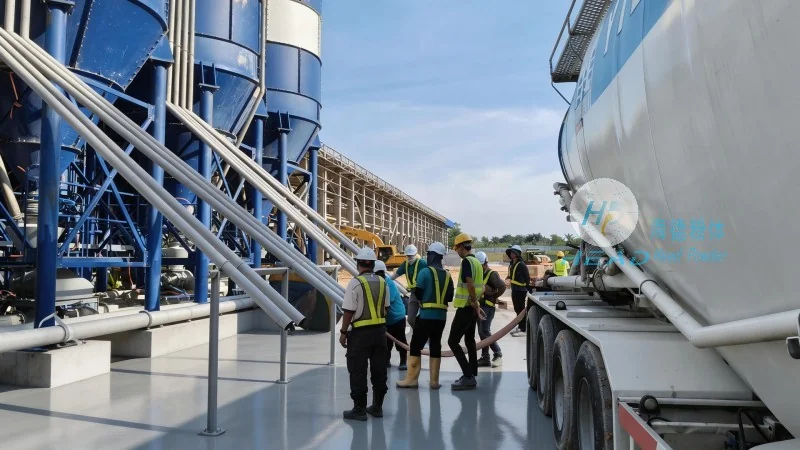
Introduction to River Sand Powder Conveying
River sand, a widely used construction material, often requires processing into a powder form for easier handling and application. Powder conveying systems are essential in transferring this material from storage to processing equipment or directly to construction sites. The core of these systems lies in the principles of fluidization, air movement, and mechanical transport, which work together to ensure consistent and reliable material flow.
Key Principles of River Sand Powder Conveying
The primary principle behind river sand powder conveying is the creation of a fluidized state where the sand particles are suspended in a moving air stream. This is achieved by introducing air at a controlled velocity through a hopper or feeder, allowing the sand to behave like a fluid. The air velocity must be sufficient to overcome the gravitational force acting on the sand particles, ensuring they remain airborne and can be transported over long distances without clogging or degradation.
Another critical principle is the use of positive pressure or negative pressure systems. Positive pressure systems blow air into the conveying line, pushing the sand forward, while negative pressure systems create a vacuum that draws the sand into the line. The choice between these systems depends on the distance, material characteristics, and environmental considerations of the application. For river sand, which is relatively fine and cohesive, positive pressure systems are often preferred due to their ability to handle higher particle loads and maintain consistent flow rates.

Working Scene Characteristics of River Sand Powder Conveying
River sand powder conveying is applied in various industrial and construction scenarios, each with distinct characteristics that influence system design and operation. One common application is in sand processing plants, where the sand is first dried, crushed, and then conveyed as a powder to mixing or batching equipment. In such settings, the system must handle large volumes of material efficiently, with minimal loss and contamination.
Another typical working scene is at construction sites, where the sand powder is delivered directly to concrete mixing trucks or on-site storage silos. Here, the conveying system needs to be compact, mobile, and capable of operating in outdoor environments with varying weather conditions. The system must also ensure that the sand powder remains dry and free from clumping, which can affect the quality of the final construction product.
In mining and quarry operations, river sand powder conveying is used to transport sand from extraction sites to processing facilities or to transport processed sand to storage areas. These applications often involve longer distances and more complex layouts, requiring advanced control systems to optimize material flow and energy consumption. The systems must also be robust enough to handle abrasive materials and potential blockages caused by moisture or debris.

System Components and Design Considerations
The effectiveness of a river sand powder conveying system depends on several key components, each designed to address specific challenges in material handling. The hopper or feeder is the first component, responsible for feeding the sand into the conveying line. It must be designed to prevent material buildup and ensure a consistent flow rate, which is critical for maintaining system efficiency.
The air supply system, including the blower or vacuum pump, provides the necessary air pressure or vacuum to move the sand. The selection of the blower size and type is based on the material's properties, such as particle size, density, and moisture content, as well as the conveying distance and line length. Proper air filtration is also essential to prevent dust from escaping into the environment and to protect the blower from wear and tear.
The conveying line itself is typically made of flexible or rigid tubing, depending on the application. Flexible lines are often used for short to medium distances and in mobile applications, while rigid lines are preferred for long-distance and high-pressure systems. The line must be constructed from materials resistant to abrasion and corrosion, such as stainless steel or high-density polyethylene, to ensure longevity and maintain material purity.
Advantages and Challenges in River Sand Powder Conveying
Implementing river sand powder conveying offers several advantages, including reduced labor costs, improved material handling efficiency, and enhanced safety compared to traditional methods like manual shoveling or truck transport. The systems can handle large volumes of material at high speeds, minimizing downtime and increasing productivity. Additionally, the enclosed nature of the system prevents dust from spreading, reducing environmental impact and improving workplace safety.

However, there are also challenges associated with river sand powder conveying. One major challenge is the potential for material clogging, especially when the sand contains moisture or fine particles that can agglomerate. This requires regular maintenance and cleaning of the system components to ensure smooth operation. Another challenge is the energy consumption of the air system, which can be significant for long-distance conveying. Optimizing the system design and using energy-efficient blowers can help mitigate this issue.
Furthermore, the system must be designed to handle the abrasive nature of river sand, which can cause wear on components like the hopper, feeder, and conveying line. Using wear-resistant materials and regular inspection can help extend the system's lifespan and reduce maintenance costs. Finally, the system must comply with environmental regulations regarding dust emissions, which may require additional filtration or emission control measures.
Conclusion
River sand powder conveying is a vital technology in the sand processing and construction industries, enabling efficient and reliable transport of this essential material. By understanding the underlying principles and working scene characteristics, industries can design and implement systems that meet their specific needs while maximizing efficiency and minimizing challenges. As technology advances, further improvements in system design and material handling will continue to enhance the performance and application of river sand powder conveying systems.