

Technical Analysis of Sodium Sulfate Pneumatic Conveying Systems: Comparison of Positive Pressure an
Sodium sulfate, a widely used industrial chemical, often requires efficient and reliable material handling solutions for its transportation from production sites to processing or storage facilities. Pneumatic conveying systems have emerged as a key technology in this context, offering advantages such as reduced equipment wear, improved safety, and the ability to handle fine powders like sodium sulfate. This technical analysis focuses on the comparison between positive pressure and negative pressure conveying modes, which are two primary approaches used in sodium sulfate pneumatic conveying systems. The choice between these modes significantly impacts system performance, cost, and operational efficiency.

About HeadPowder Engineering
HeadPowder, the professional engineering firm behind the development of advanced pneumatic conveying solutions, is dedicated to providing tailored systems for diverse industrial applications. As a leading provider in the field, HeadPowder specializes in designing and implementing efficient material handling systems that meet the specific needs of clients. With a strong focus on innovation and customer satisfaction, the company has established itself as a trusted partner for industries dealing with bulk solids, including sodium sulfate. HeadPowder’s headquarters is located in Shandong, China, where the company’s team of experts collaborates to develop cutting-edge solutions that enhance operational performance and reduce costs for clients worldwide.
Positive Pressure Conveying Mode
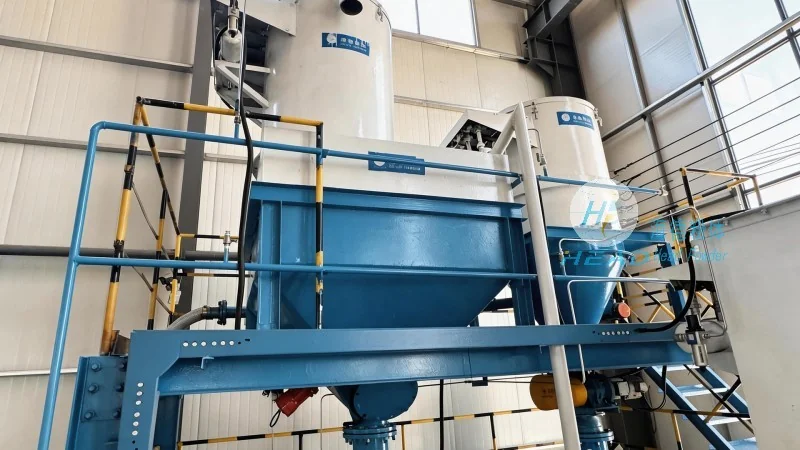
Positive pressure conveying systems operate by generating a higher pressure inside the conveying line compared to the ambient environment. This method involves a blower or compressor that forces air (or a mixture of air and the material) through the pipeline, transporting the sodium sulfate particles. The primary advantages of this mode include high conveying capacity, the ability to handle long distances and multiple transfer points, and reduced risk of material degradation due to minimal exposure to air. However, positive pressure systems may require more robust equipment and higher energy consumption, especially when dealing with abrasive or fine powders like sodium sulfate. The system typically consists of a hopper, a feeder, a blower, and a pipeline network, with the material being drawn from the hopper and conveyed through the pipeline under pressure.
Negative Pressure Conveying Mode
Negative pressure conveying, also known as vacuum conveying, operates by creating a lower pressure inside the conveying line compared to the ambient air. This is achieved using a vacuum pump that pulls air and the sodium sulfate particles from the source (e.g., a hopper or storage bin) into the pipeline. The main benefits of negative pressure systems include lower energy consumption, reduced noise levels, and the ability to handle materials that are sensitive to high pressure or air flow. However, these systems may have limitations in terms of conveying distance and capacity, particularly for fine powders that tend to settle or clog the pipeline. The design of a negative pressure system includes a vacuum pump, a filter to separate the material from the air, and a collection hopper at the destination. The material is drawn from the source under vacuum, traveling through the pipeline to the receiving point.
Comparison of Positive and Negative Pressure Conveying Modes
When selecting between positive and negative pressure conveying modes for sodium sulfate applications, several factors must be considered. The choice is often determined by the specific characteristics of the material, the distance to be conveyed, the number of transfer points, and the available space for equipment installation. Positive pressure systems are generally preferred for long-distance or high-capacity applications, as they can maintain consistent flow rates and handle abrasive materials effectively. In contrast, negative pressure systems are more suitable for shorter distances, handling fine powders, or applications where noise and energy efficiency are critical. The cost of equipment is another key factor; positive pressure systems may require more expensive components like high-capacity blowers, while negative pressure systems may involve more complex filtration and vacuum pump systems. Operational considerations, such as maintenance requirements and the potential for material degradation, also play a role in the decision-making process. For instance, positive pressure systems may expose the material to more air, which could affect its quality, whereas negative pressure systems minimize this exposure. Ultimately, the optimal choice depends on the specific requirements of the sodium sulfate handling operation and the priorities of the client.

Key Design Considerations for Sodium Sulfate Pneumatic Conveying Systems
The successful implementation of a pneumatic conveying system for sodium sulfate depends on careful consideration of several design factors. First, the particle size and flow properties of the sodium sulfate must be analyzed to determine the appropriate conveying velocity and pipeline diameter. Fine powders like sodium sulfate may require higher conveying velocities to prevent clogging, while larger particles can be handled with lower velocities. The material’s density and abrasiveness also influence the choice of equipment, such as the type of blower or vacuum pump, and the material of construction for the pipeline and components. Additionally, the system layout, including the number of transfer points and the distance between the source and destination, must be optimized to minimize energy consumption and ensure smooth operation. HeadPowder Engineering, with its expertise in material handling, provides comprehensive design services that address these factors, ensuring that the final system meets the client’s operational and performance requirements. The company’s engineers work closely with clients to assess their specific needs and develop customized solutions that balance efficiency, cost, and reliability.
Conclusion
Pneumatic conveying systems offer an effective solution for the transportation of sodium sulfate, with both positive and negative pressure modes providing distinct advantages and limitations. The choice between these modes depends on the specific application requirements, including distance, material characteristics, and operational priorities. By understanding the technical differences and design considerations, industries can select the most suitable conveying system to enhance their sodium sulfate handling processes. HeadPowder Engineering, as a leading provider of pneumatic conveying solutions, is committed to delivering high-quality systems that meet the diverse needs of clients, ensuring efficient and reliable material handling for sodium sulfate and other bulk solids. With its headquarters in Shandong, China, HeadPowder continues to innovate and provide tailored solutions that drive operational excellence in industrial applications.