

What is Lime Powder Material Handling Equipment? What Are Its Design Principles?
Shandong HeadPowder Engineering Co., Ltd. is a professional manufacturer specializing in material handling equipment, with a focus on solutions for lime powder handling. The company is headquartered in Shandong, China, and has extensive experience in designing and manufacturing equipment tailored to the unique properties of lime powder.
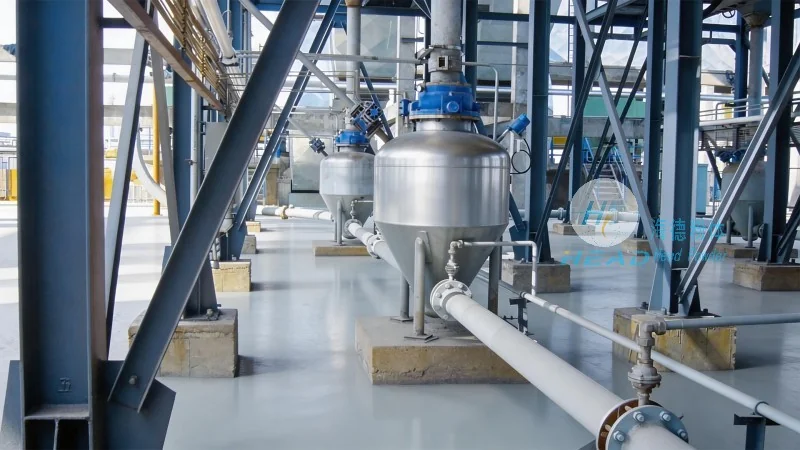
Understanding Lime Powder Material Handling Equipment
Lime powder, a fine particulate material derived from limestone processing, is widely used in various industries including chemical manufacturing, construction, and environmental treatment. Due to its fine texture and potential for dust generation, efficient and safe handling is critical. Material handling equipment for lime powder is designed to transport this material from storage to processing units or end-use applications while minimizing dust exposure and ensuring operational reliability.
Key Design Principles for Lime Powder Handling Systems
The design of lime powder material handling equipment revolves around several core principles to address the material's physical characteristics. First, the equipment must maintain a closed system to prevent dust from escaping into the environment, which is essential for workplace safety and compliance with environmental regulations. This is typically achieved through robust sealing mechanisms on hoppers, conveyor components, and transfer points.

Second, the equipment must accommodate the flow properties of lime powder. Lime powder can be prone to caking or bridging in storage silos, which can disrupt flow and cause blockages. Therefore, designs often include features such as agitators or vibrators to maintain material flowability. The choice of conveyor type—whether pneumatic (air-assisted), screw, or belt—depends on factors like the required distance, volume, and the need for dust control.
Pneumatic Conveying Systems: A Common Solution
Pneumatic conveying is a popular method for handling lime powder due to its ability to transport material in a closed, dust-free environment. These systems use air pressure to move the powder through pipes. There are two main types: positive pressure systems, where air is blown into the system to push the material forward, and negative pressure (or vacuum) systems, where air is drawn out to pull the material. The selection of a positive or negative system depends on the distance and the need to minimize air leakage.
Key components of a pneumatic conveying system for lime powder include a hopper to store the material, a feeder to control the flow rate, a blower or vacuum pump to generate the air pressure, and a series of pipes with appropriate fittings. The design of the pipes, including their diameter and length, is critical to ensure efficient material transport without excessive pressure loss or particle degradation.

Screw and Belt Conveyors for Lime Powder
For shorter distances or applications where dust control is less critical, screw and belt conveyors are often used. Screw conveyors use a rotating screw to move material along a trough. This method is effective for vertical or inclined transport and can handle a wide range of particle sizes. However, they are less suitable for long horizontal runs due to potential wear on the screw and trough.
Belt conveyors, on the other hand, use a continuous belt to transport material horizontally or at a slight incline. They are capable of handling larger volumes and longer distances compared to screw conveyors. To prevent dust generation, belt conveyors may be enclosed in a housing or equipped with dust collection systems at transfer points.
Ensuring Safety and Efficiency in Design
When designing lime powder handling equipment, safety is a top priority. This includes features such as explosion-proof components (if the material is handled in potentially explosive environments), dust explosion suppression systems, and emergency shutdown mechanisms. Additionally, the equipment must be easy to maintain, with accessible components and clear operational indicators to reduce downtime.

Efficiency is also a key consideration. The design aims to minimize energy consumption while maximizing throughput. This involves optimizing the speed of conveyors, the pressure in pneumatic systems, and the flow rate of feeders. Proper sizing of components based on the specific characteristics of the lime powder—such as its bulk density, flowability, and moisture content—ensures that the system operates at peak performance.
Conclusion
Lime powder material handling equipment is a specialized field that requires careful consideration of the material's unique properties. From closed-system designs to the selection of appropriate conveyor types, each component is engineered to ensure safe, efficient, and reliable transport. Companies like Shandong HeadPowder Engineering Co., Ltd. play a crucial role in providing tailored solutions that meet the demands of various industries, helping to streamline processes and enhance operational safety.