

Working Principle and Characteristics of Lithium-Ion Battery Powder Material Handling
HeadPowder, a leading manufacturer in the field of material handling solutions, specializes in providing advanced systems for lithium-ion battery powder processing. This article delves into the working principle and key characteristics of lithium-ion battery powder material handling, highlighting the technical aspects and operational advantages of such systems.

Introduction to Lithium-Ion Battery Powder Material Handling
Lithium-ion battery production involves the handling of various powders, including cathode active materials, anode materials, and binders. Efficient and reliable material handling is crucial for maintaining product quality, ensuring process stability, and enhancing overall production efficiency. HeadPowder Engineering Co., Ltd., based in Shandong, China, has developed specialized equipment and systems tailored to the unique requirements of lithium-ion battery powder processing.
The Working Principle of Lithium-Ion Battery Powder Material Handling
The material handling process for lithium-ion battery powders typically involves several key steps, each designed to ensure the safe and efficient transport of powders from storage to processing equipment. The primary working principle revolves around the use of controlled environments and specialized machinery to manage powder flow, prevent contamination, and minimize material loss.
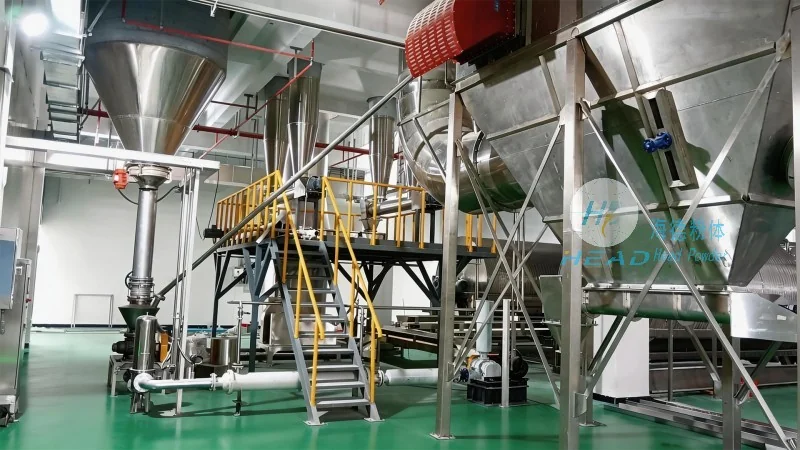
One common method is the use of screw conveyors or auger systems, which are ideal for transporting dry powders in a closed environment. These systems feature rotating screws that move material forward, maintaining a consistent flow rate and preventing dust generation. For more complex material handling needs, such as transporting powders over longer distances or between different processing stages, pneumatic conveying systems are employed. These systems use compressed air to transport powders in a sealed pipeline, ensuring minimal exposure to air and maintaining the integrity of the material.
Another critical aspect of the working principle is the management of electrostatic discharge (ESD). Lithium-ion battery powders are often highly conductive and can generate static electricity during handling. To mitigate this risk, systems are equipped with grounding mechanisms and anti-static materials. Additionally, the use of inert gases or controlled humidity levels helps to prevent oxidation and maintain the purity of the powders.
Key Characteristics of Lithium-Ion Battery Powder Material Handling Systems
HeadPowder's material handling solutions for lithium-ion battery powders exhibit several distinct characteristics that set them apart in the industry. These features are designed to address the specific challenges of powder processing in battery manufacturing, ensuring high performance and reliability.

1. High Efficiency and Precision: The systems are engineered to deliver precise control over material flow rates, ensuring consistent dosing and minimal variation in batch-to-batch processing. This precision is crucial for maintaining the uniformity of battery components, which directly impacts the performance and lifespan of the final product.
2. Safety and Environmental Protection: With a focus on safety, the systems incorporate features such as dust collection and filtration to prevent airborne particle exposure. Additionally, the use of sealed and enclosed designs minimizes the risk of material contamination and cross-contamination between different batches. This not only protects operators but also ensures compliance with environmental regulations.
3. Customization and Flexibility: HeadPowder understands that each battery manufacturing facility has unique requirements. Therefore, their material handling systems are highly customizable, allowing for integration with existing production lines and adaptation to different powder types and processing stages. This flexibility enables manufacturers to optimize their operations and scale production as needed.

4. Durability and Low Maintenance: Constructed with high-quality materials and robust engineering, the systems are designed for long-term durability and minimal downtime. Features such as wear-resistant components and easy-to-clean designs reduce maintenance requirements, contributing to lower operational costs and increased productivity.
Conclusion
HeadPowder Engineering Co., Ltd., based in Shandong, China, provides advanced lithium-ion battery powder material handling solutions that combine cutting-edge technology with practical design. By understanding the working principles and key characteristics of these systems, manufacturers can enhance their production processes, improve product quality, and achieve greater operational efficiency. With a commitment to innovation and customer satisfaction, HeadPowder continues to be a trusted partner in the battery manufacturing industry.