

Principle and Working Scene Characteristics of Pneumatic Conveying for Sawdust and Wood Flour Powder
HeadPowder, a leading provider in the field of powder handling solutions, specializes in the design and implementation of pneumatic conveying systems tailored for materials like sawdust and wood flour. This article delves into the fundamental principles of pneumatic conveying and highlights the key characteristics of working environments where such systems are effectively applied.

Understanding Pneumatic Conveying Principles
Pneumatic conveying is a method of transporting bulk materials through a pipeline using a gas stream, typically air or a mixture of air and other gases. The core principle involves creating a pressure differential within the system to move the material from the source to the destination. There are two primary types of pneumatic conveying: pressure and vacuum systems. Pressure systems operate by forcing air into the conveying line under positive pressure, while vacuum systems create a negative pressure to draw material into the system. For sawdust and wood flour, which are often light and fine powders, pressure systems are commonly preferred due to their ability to handle high material loads and maintain consistent flow rates.
The process begins with the material being fed into the conveying line, either by a hopper or a feeder, and then accelerated by the moving air stream. The air velocity must be sufficient to overcome the gravitational forces and the frictional resistance within the pipeline, ensuring that the material remains suspended and transported efficiently. Key components in a pneumatic conveying system include the material feed hopper, the air compressor or vacuum pump, the conveying pipeline, and the discharge device. Each component plays a critical role in maintaining the system's performance and ensuring the safe and reliable transport of sawdust and wood flour.
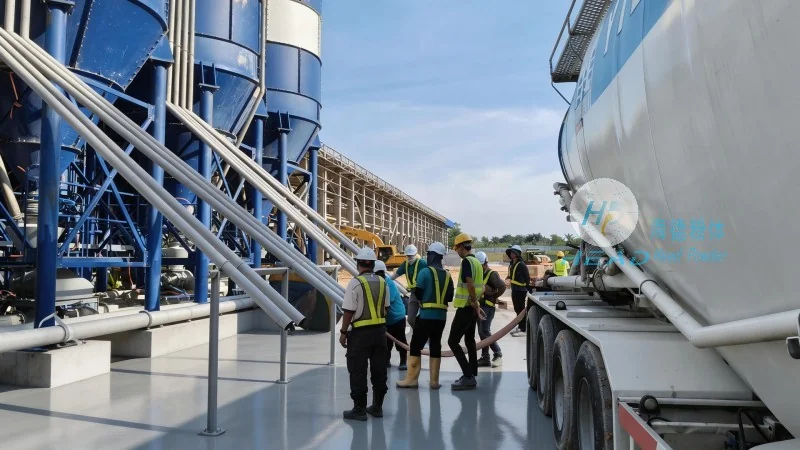
Key Working Scene Characteristics for Sawdust and Wood Flour Conveying
The application of pneumatic conveying for sawdust and wood flour is prevalent in various industrial settings, each with distinct characteristics that influence system design and operation. One common working scene is in woodworking and furniture manufacturing facilities, where sawdust and wood flour are generated as byproducts of sawing and milling operations. In such environments, the material is often collected from multiple points and needs to be transported to a central storage or processing area. The system must be capable of handling varying material flow rates, as production levels fluctuate throughout the day.
Another typical scenario involves the use of sawdust and wood flour in the production of composite materials, such as particleboard or MDF (medium-density fiberboard). In these manufacturing processes, the powder is mixed with other ingredients and then conveyed to a mixing or extrusion unit. The working environment in this case requires a system that can maintain a consistent particle size distribution and avoid material segregation, which can affect the quality of the final product. HeadPowder's expertise in customizing pneumatic conveying systems ensures that the material is transported without degradation, preserving its properties for subsequent processing steps.

In biomass energy facilities, sawdust and wood flour are often used as fuel for boilers or power generation. The pneumatic conveying system in this context must be designed to handle large volumes of material over long distances, often from storage silos to the combustion chamber. The system must also be equipped with features to prevent dust explosions, as fine powders can be hazardous in certain conditions. HeadPowder's solutions incorporate safety measures, such as explosion-proof designs and proper ventilation, to ensure compliance with industry standards and operational safety.

HeadPowder's Expertise in Pneumatic Conveying Solutions
Shandong HeadPowder Engineering Co., Ltd., based in Shandong, China, is dedicated to providing innovative and efficient pneumatic conveying solutions for industries dealing with sawdust and wood flour. The company leverages years of experience and advanced engineering capabilities to design systems that meet the specific needs of each client. By understanding the unique characteristics of sawdust and wood flour, such as their light weight, fine particle size, and potential for dust generation, HeadPowder tailors its solutions to optimize performance and reliability.
HeadPowder's team of engineers works closely with clients to assess their operational requirements, including material flow rates, distance of transport, and environmental considerations. This collaborative approach ensures that the final pneumatic conveying system is not only effective but also cost-efficient and easy to maintain. The company's commitment to quality and customer satisfaction has made it a trusted partner for businesses seeking reliable powder handling solutions in the woodworking, composite manufacturing, and biomass energy sectors.