

Principle and Working Scene Characteristics of Pneumatic Conveying Lines for Powder Electrolyte Mate
For industrial applications involving the transport of powder electrolyte materials, pneumatic conveying lines offer an efficient and reliable solution. This article explores the fundamental principles behind these systems and highlights key characteristics of their operational scenarios, with a focus on the expertise of Shandong HeadPowder Engineering Co., Ltd., a leading provider in the field.

Pneumatic Conveying: An Overview
Pneumatic conveying systems are designed to transport bulk materials, such as powder electrolytes, through a pipeline using air or other gases. Unlike traditional mechanical conveying methods, which rely on belts, buckets, or screws, pneumatic systems utilize the force of compressed air to move materials. This approach is particularly advantageous for materials that are dusty, corrosive, or sensitive to mechanical stress, making it ideal for electrolyte powders used in battery manufacturing and other high-tech industries.
The Core Principle of Pneumatic Conveying Lines
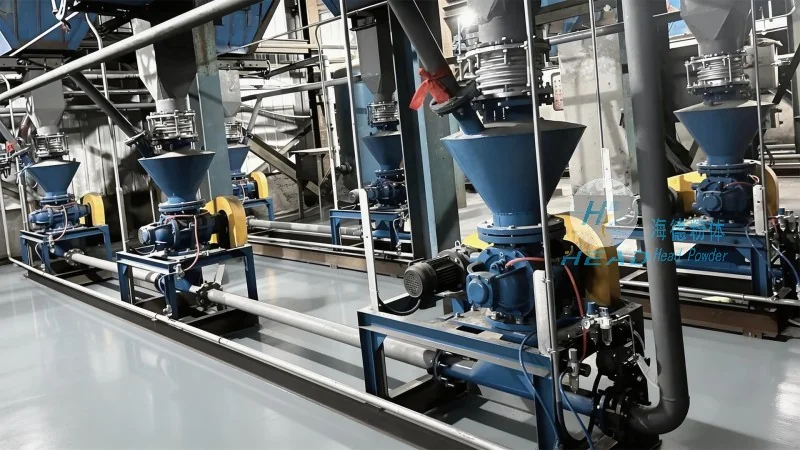
The operation of a pneumatic conveying line is based on the principle of creating a pressure differential between the inlet and outlet of the system. At the material loading point, a venturi or a rotary valve introduces the powder into the pipeline, where it is mixed with the moving air stream. The air, under pressure, propels the powder particles forward, maintaining a consistent flow rate and preventing clogging. The system typically includes components like a blower, filter, and control valves to regulate the air flow and material transport. This closed-loop design ensures minimal dust dispersion and environmental contamination, aligning with modern industrial safety and sustainability standards.
Key Working Scene Characteristics
The effectiveness of pneumatic conveying lines is influenced by several operational characteristics that are tailored to specific industrial needs. First, the system's capacity and flow rate are determined by the air pressure, pipeline diameter, and material properties. For powder electrolytes, which often have fine particle sizes and low bulk density, higher air velocities are required to prevent particle settling and ensure smooth transport. Second, the system's flexibility allows for multiple loading and unloading points, enabling complex material handling in production lines. This is crucial in battery manufacturing facilities where electrolyte powders need to be transferred from storage to mixing, coating, or assembly stations. Third, the system's ability to handle abrasive materials without significant wear and tear is a significant advantage. Electrolyte powders can be abrasive, but well-designed pneumatic systems with appropriate materials of construction (e.g., stainless steel or corrosion-resistant alloys) ensure long-term durability and minimal maintenance.
Application Scenarios in Battery Manufacturing
One of the primary applications of pneumatic conveying lines for powder electrolytes is in the battery industry. In lithium-ion battery production, electrolyte powders are critical components that require precise handling to maintain product quality. The conveying lines are integrated into production lines that include mixing, drying, and coating processes. For example, in a typical battery cell manufacturing line, the electrolyte powder is first stored in a silo and then conveyed to a mixing machine where it is combined with other components like solvents and additives. The pneumatic system ensures that the powder is delivered in a controlled manner, preventing contamination and ensuring consistent batch-to-batch quality. Additionally, the system's ability to handle large volumes efficiently supports high production throughput, which is essential for meeting market demands in the rapidly growing battery sector.

Advantages of Pneumatic Conveying for Electrolyte Powders
Compared to other conveying methods, pneumatic systems offer several advantages for powder electrolytes. Firstly, they provide a clean and dust-free operation, which is vital for maintaining product purity and adhering to regulatory standards. The closed system prevents dust from escaping into the environment, reducing the risk of inhalation hazards and contamination of other materials. Secondly, the system is highly flexible, allowing for changes in production volume or layout without major modifications. This adaptability is particularly valuable in dynamic manufacturing environments where production schedules may change frequently. Thirdly, the system's energy efficiency is notable, as the air pressure can be optimized to minimize energy consumption while maintaining optimal material transport. This contributes to lower operational costs and reduced environmental impact.

Customization and Integration by Shandong HeadPowder Engineering Co., Ltd.
Shandong HeadPowder Engineering Co., Ltd. specializes in designing and manufacturing customized pneumatic conveying systems tailored to the specific needs of clients. With years of experience in the industry, the company understands the unique challenges associated with handling powder electrolytes, such as their chemical properties, particle size distribution, and flow characteristics. The company's engineers work closely with clients to assess their operational requirements, including material flow rates, pipeline layout, and environmental constraints, to develop optimal solutions. Customization options include different types of blower systems (centrifugal or positive displacement), material handling components (e.g., rotary valves, feeders), and control systems to ensure seamless integration with existing production lines. The company's commitment to quality is evident in its adherence to international standards and rigorous testing protocols, ensuring that the delivered systems meet or exceed industry expectations.
Conclusion
Pneumatic conveying lines for powder electrolyte materials represent a sophisticated and efficient solution for modern industrial applications. By leveraging the principles of air pressure and material-air interaction, these systems provide reliable, clean, and flexible transport capabilities. The working scene characteristics, such as high capacity, multiple loading points, and resistance to abrasion, make them ideal for battery manufacturing and other high-tech industries. With expertise from companies like Shandong HeadPowder Engineering Co., Ltd., these systems can be customized to meet specific operational needs, ensuring optimal performance and long-term reliability. As the demand for efficient material handling in the battery and related industries continues to grow, pneumatic conveying lines will remain a critical component in maintaining productivity and product quality.