

Operation Process and Working Principle of High-Alumina Fly Ash Pneumatic Conveying Line
High-alumina fly ash is a byproduct of cement production, and its efficient handling is crucial for industrial operations. The high-alumina fly ash pneumatic conveying line, developed by Shandong HeadPowder Engineering Co., Ltd., offers a reliable solution for transporting this material. This article will explore the operation process and working principles of such a system, highlighting its key components and operational efficiency.

About Shandong HeadPowder Engineering Co., Ltd.
Shandong HeadPowder Engineering Co., Ltd. is a leading provider of industrial material handling solutions, specializing in the design, manufacturing, and installation of pneumatic conveying systems. With a strong focus on innovation and customer satisfaction, the company has established itself as a trusted partner in the cement and related industries. HeadPowder's expertise lies in creating customized solutions that meet the specific needs of clients, ensuring optimal performance and durability. The company is headquartered in Shandong, China, where it operates from its main office, providing comprehensive support and service to its global clientele.
Understanding Pneumatic Conveying Systems
Pneumatic conveying is a method of transporting bulk materials through a pipeline using air or gas as the conveying medium. In the case of high-alumina fly ash, this technology is particularly effective due to the material's properties, such as its fine particle size and high density. The system typically consists of a series of components, including a material hopper, a feeder, a compressor, and a pipeline network. These components work together to ensure the smooth and continuous movement of the fly ash from the source to the destination, minimizing downtime and operational costs.

Operation Process of the High-Alumina Fly Ash Pneumatic Conveying Line
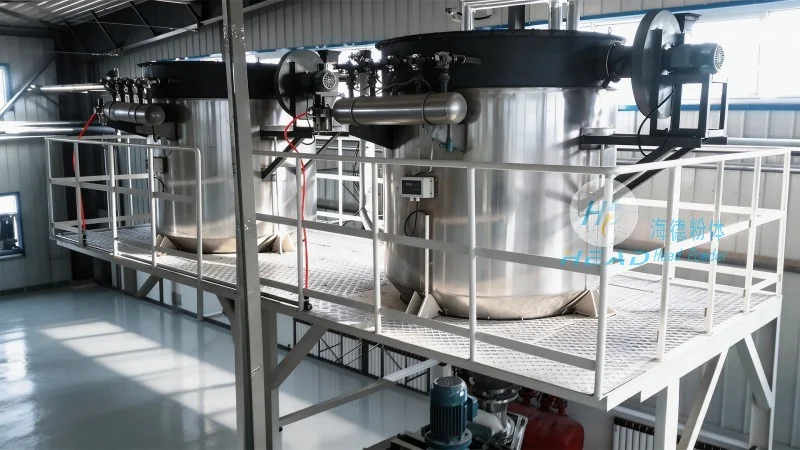
The operation of the high-alumina fly ash pneumatic conveying line involves several sequential steps. First, the fly ash is stored in a material hopper, which is equipped with a level indicator to monitor the material level. The hopper is connected to a feeder, which regulates the flow of the material into the conveying line. The feeder can be adjusted to control the discharge rate, ensuring a consistent and controlled flow of the fly ash. Next, the material is introduced into the pipeline through a rotary valve or a star feeder, which acts as a gate to control the material's entry into the system. The compressed air, generated by a high-pressure compressor, is then introduced into the pipeline, creating a positive pressure environment that propels the fly ash particles forward. The air and material mixture travels through the pipeline, with the material being carried by the air flow. The pipeline is designed with appropriate bends and elbows to accommodate the material's movement, and the system includes pressure sensors and flow meters to monitor the performance and ensure optimal operation. Finally, the fly ash is discharged at the destination point, such as a storage silo or a processing unit, where it is collected and used for further applications.
Working Principles of the System
The working principle of the high-alumina fly ash pneumatic conveying line is based on the principle of fluidization and drag force. The compressed air creates a flow within the pipeline, which lifts and transports the fly ash particles. The air velocity is maintained at a level that is sufficient to overcome the gravitational force and the frictional resistance of the material particles. The system operates under positive pressure, which prevents the entry of external air and maintains the integrity of the material flow. The key components of the system, such as the compressor, feeder, and pipeline, are designed to work in harmony to achieve efficient material transport. The use of high-quality materials and advanced engineering ensures that the system operates reliably and with minimal maintenance requirements. The control system, which includes sensors and automation devices, allows for real-time monitoring and adjustment of the operational parameters, ensuring optimal performance and energy efficiency.
Advantages of the High-Alumina Fly Ash Pneumatic Conveying Line
The high-alumina fly ash pneumatic conveying line offers several advantages over traditional material handling methods. First, it provides a continuous and automated operation, reducing the need for manual intervention and labor costs. The system is also capable of handling a wide range of material types and particle sizes, making it versatile for various industrial applications. The use of pneumatic conveying minimizes material degradation and contamination, as the material is not in direct contact with other surfaces or equipment. Additionally, the system is compact and can be installed in confined spaces, saving valuable floor space. The energy efficiency of the system is another key advantage, as it uses compressed air efficiently and minimizes energy consumption. The system also offers high reliability and durability, with a long service life and low maintenance costs. Overall, the high-alumina fly ash pneumatic conveying line is an effective solution for the efficient and safe handling of high-alumina fly ash in industrial settings.
Conclusion
Shandong HeadPowder Engineering Co., Ltd. has developed an advanced high-alumina fly ash pneumatic conveying line that addresses the challenges of transporting this material efficiently. The system's operation process and working principles are designed to ensure optimal performance, reliability, and energy efficiency. By leveraging the expertise of HeadPowder, clients can benefit from a customized solution that meets their specific requirements, enhancing their operational productivity and reducing costs. The company's commitment to quality and innovation ensures that the high-alumina fly ash pneumatic conveying line remains a leading solution in the industry, providing reliable and efficient material handling for years to come.