

Introduction to Pneumatic Conveying of Adipic Acid: Structural Principles and Working Mechanisms
HeadPowder, a leading engineering firm based in Shandong, China, specializes in the design and implementation of advanced pneumatic conveying systems for various industrial applications. This article provides an overview of the adipic acid pneumatic conveying system, focusing on its structural principles and operational mechanisms.

Company Profile and Background
HeadPowder Engineering Co., Ltd. is a professional engineering company dedicated to providing high-quality solutions for material handling and transportation in industrial sectors. With a strong commitment to innovation and precision, the company has established itself as a trusted partner in the field of pneumatic conveying technology. HeadPowder's headquarters is located in Shandong, China, where the company leverages local expertise and resources to deliver tailored solutions for clients worldwide.

Overview of Adipic Acid Pneumatic Conveying System
The adipic acid pneumatic conveying system is a specialized equipment designed to transport adipic acid, a key raw material widely used in the production of nylon and other polymers, through a pneumatic conveying process. This system utilizes compressed air or other gases to move the material from the source to the destination, eliminating the need for traditional mechanical conveying methods such as belt conveyors or screw conveyors. The system is engineered to ensure efficient, reliable, and safe transportation of adipic acid, meeting the stringent requirements of modern industrial production.

Structural Principles and Working Mechanisms
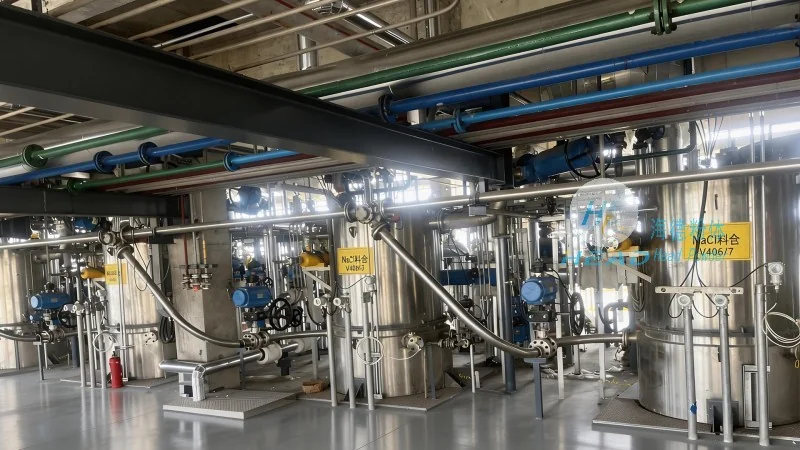
The adipic acid pneumatic conveying system operates based on the fundamental principles of fluid dynamics and material handling. The core components of the system include a hopper for material storage, a rotary valve for controlled material discharge, a conveying pipeline, a fan or blower to generate the necessary air pressure, and a receiver for material deposition. The system works by first loading adipic acid into the hopper. The rotary valve then regulates the flow of material into the pipeline, where it is mixed with the compressed air from the fan. The air flow propels the adipic acid particles through the pipeline, transporting them to the receiver. The receiver collects the material and may include a dust collection system to ensure environmental compliance. The entire process is controlled by a programmable logic controller (PLC), which monitors and adjusts the air pressure, material flow rate, and other parameters to maintain optimal performance.
Key Technical Features and Advantages
The adipic acid pneumatic conveying system offers several advantages over conventional conveying methods. Firstly, it provides a dust-free and hygienic environment, which is crucial for the handling of adipic acid, a material used in food and pharmaceutical applications. Secondly, the system is highly flexible, allowing for changes in the conveying route and capacity without significant modifications. Thirdly, it reduces maintenance costs and downtime compared to mechanical conveyors, as there are fewer moving parts and less wear and tear. Additionally, the system can handle a wide range of particle sizes and moisture contents, making it suitable for various production scenarios. The use of compressed air also enables the system to transport materials over long distances with minimal energy consumption.
Application Scenarios and Industry Relevance
The adipic acid pneumatic conveying system is widely used in the chemical and polymer industries, particularly in the production facilities of adipic acid manufacturers. It is also applicable in other sectors where adipic acid is used as an intermediate, such as in the production of nylon fibers, plasticizers, and coatings. The system's ability to handle large volumes of material efficiently and safely makes it an essential component in modern industrial operations. By integrating advanced control systems and materials handling technology, HeadPowder ensures that the adipic acid pneumatic conveying system meets the highest standards of performance and reliability, supporting the smooth operation of industrial production lines.