

Introduction to the Structure and Working Principle of a Lime Powder Pneumatic Conveying System
For industries dealing with lime powder, efficient and reliable material handling is crucial. The pneumatic conveying system designed for lime powder, as offered by Shandong HeadPowder Engineering Co., Ltd., represents a sophisticated solution that integrates advanced engineering principles to ensure optimal performance and safety. This system is engineered to handle the unique challenges associated with lime powder, such as its fine particle size, hygroscopic nature, and potential for dust generation, making it an essential asset for various industrial applications.

Key Components and Structure of the Lime Powder Pneumatic Conveying System
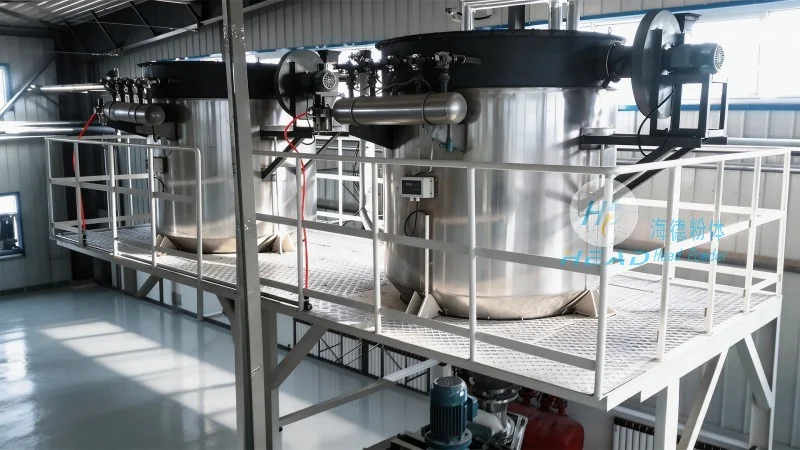
The pneumatic conveying system for lime powder consists of several critical components that work in harmony to achieve seamless material transport. At the core of the system is the conveying pipeline, which is typically made from high-quality materials like stainless steel or special plastic composites to prevent corrosion and ensure durability. The pipeline is designed with smooth inner surfaces to minimize friction and reduce the risk of particle accumulation, which is vital for maintaining consistent flow rates. Additionally, the system incorporates air supply units, including blowers or compressors, that generate the necessary air pressure to move the powder through the pipeline. These units are equipped with control mechanisms to adjust airflow and pressure, allowing for precise regulation of the conveying process. The feeding equipment is another essential component, which may include hoppers or rotary valves that feed the lime powder into the system at a controlled rate. This ensures a steady supply of material without causing blockages or uneven flow. Finally, the system includes discharge devices, such as spray nozzles or cyclone separators, that safely release the lime powder at the destination point. These components are strategically positioned to prevent dust dispersion and maintain environmental compliance.
Working Principle of the Lime Powder Pneumatic Conveying System
The operation of the lime powder pneumatic conveying system is based on the principle of pneumatic transport, where air is used as the medium to move the solid particles. The process begins with the feeding of lime powder into the system through the feeding equipment. The air supply unit then generates a high-pressure airflow that enters the conveying pipeline. As the air flows through the pipeline, it carries the lime powder particles along with it, creating a suspension of powder and air. The velocity of the air is carefully controlled to ensure that the powder particles remain suspended without settling or causing blockages. The conveying pipeline is designed with appropriate bends and fittings to guide the material to the desired destination, while minimizing pressure losses. At the discharge point, the system uses cyclone separators or other filtration devices to separate the powder from the air, allowing the powder to be collected in a container or storage silo. The separated air is then either recirculated back into the system or vented to the atmosphere, depending on the system design. This closed-loop operation helps to maintain efficiency and reduce energy consumption. The entire process is monitored and controlled by a sophisticated control system that adjusts parameters such as air pressure, flow rate, and feeding speed in real-time, ensuring optimal performance and preventing operational issues.

Advantages of Using a Pneumatic Conveying System for Lime Powder
Implementing a pneumatic conveying system for lime powder offers numerous advantages over traditional methods like belt conveyors or bucket elevators. Firstly, the system provides a clean and dust-free operation, as the material is transported within a sealed pipeline, preventing dust dispersion and minimizing the risk of contamination. This is particularly important for lime powder, which can be hazardous if inhaled or come into contact with sensitive equipment. Secondly, the system offers flexibility in layout, as the conveying pipeline can be installed in various configurations, including vertical, horizontal, or a combination of both, to suit the specific requirements of the facility. This allows for efficient use of space and easy integration with existing infrastructure. Thirdly, the system is energy-efficient, as it uses air as the primary medium, which is more cost-effective and environmentally friendly compared to mechanical systems that rely on motors and gears. The control system optimizes energy usage by adjusting airflow and pressure based on the material flow rate. Fourthly, the system ensures high material transfer efficiency, with minimal material loss and consistent flow rates. This reduces waste and improves overall productivity. Finally, the system is low-maintenance, as it has fewer moving parts compared to traditional systems, resulting in lower operational costs and longer service life.

Application Scenarios and Industries
The lime powder pneumatic conveying system is widely used in various industries where lime powder is a key raw material. In the construction industry, the system is used to transport lime powder from storage silos to mixing plants, ensuring a steady supply of material for concrete and mortar production. The system's ability to handle large volumes and maintain consistent flow rates makes it ideal for high-volume construction projects. In the chemical industry, the system is used to transport lime powder to reactors and processing units, where it is used as a neutralizing agent or in the production of other chemicals. The system's ability to handle corrosive materials and maintain a clean environment is crucial in this industry. In the environmental industry, the system is used to transport lime powder for flue gas desulfurization (FGD) processes, where it is used to remove sulfur dioxide from industrial emissions. The system's efficiency and reliability are essential for maintaining compliance with environmental regulations. Additionally, the system is used in the food and beverage industry for transporting lime powder used in food processing and as a dietary supplement. The system's clean and hygienic design ensures that the material remains free from contamination, meeting the strict standards of the food industry.