

What is Waste Powder Pneumatic Conveying? What Are the Design Principles?
Waste powder pneumatic conveying is a technology used to transport solid waste materials in the form of powders or fine particles through a pipeline using air or other gases. This method is widely adopted in waste management facilities, recycling plants, and industrial settings where the efficient movement of bulk waste is required. Unlike traditional mechanical conveying systems, which rely on belts, screws, or buckets, pneumatic conveying utilizes the force of moving air to move materials, offering advantages such as reduced equipment wear, minimal maintenance, and the ability to handle materials that are difficult to transport mechanically. For example, waste powders like municipal solid waste (MSW) or industrial byproducts often contain abrasive or sticky components that can damage mechanical components, making pneumatic conveying a more suitable option.

About Shandong HeadPowder Engineering Co., Ltd.
At Shandong HeadPowder Engineering Co., Ltd., we specialize in the design, manufacturing, and installation of advanced pneumatic conveying systems tailored for waste management applications. With our headquarters located in Shandong, China, our team of experienced engineers and technicians leverages cutting-edge technology and industry best practices to deliver customized solutions that meet the unique needs of our clients. Our commitment to quality and innovation has established us as a trusted partner in the waste processing industry, providing reliable and efficient equipment that enhances operational efficiency and reduces environmental impact. We pride ourselves on our ability to provide turnkey solutions, from initial system design and engineering to on-site installation and commissioning, ensuring that our clients receive a fully integrated and functional system that meets their specific requirements.
The Design Principles of Waste Powder Pneumatic Conveying Systems
The successful design of a waste powder pneumatic conveying system involves several key principles that ensure optimal performance, reliability, and efficiency. The first principle is the selection of the appropriate conveying system type, which can be categorized into two main groups: positive pressure and negative pressure systems. Positive pressure systems use a blower or fan to generate air pressure that pushes the material through the pipeline, while negative pressure systems use a vacuum to draw the material into the system. The choice between these systems depends on factors such as the distance of material transport, the type of waste material, and the required flow rate. For short-distance transport, positive pressure systems are often preferred due to their higher pressure capabilities and lower energy consumption. However, for longer distances or applications where dust control is critical, negative pressure systems may be more suitable as they can maintain a lower pressure environment, reducing the risk of dust leakage.

Another critical design principle is the determination of the air-to-solid ratio (ASR), which is the ratio of the volume of air to the volume of material being conveyed. The ASR is a key parameter that influences the system's capacity and efficiency. A higher ASR typically results in higher conveying speeds but may increase energy consumption and equipment wear. Conversely, a lower ASR may reduce energy use but could lead to lower conveying rates or even system blockages if not properly managed. Engineers must carefully calculate the ASR based on the specific characteristics of the waste powder, such as particle size (typically ranging from 10 microns to 1 millimeter), density (often between 0.5 to 2.5 g/cm³), and moisture content (which can affect flowability and dust generation). For example, a waste powder with a high moisture content may require a higher ASR to prevent caking or blockages in the pipeline.
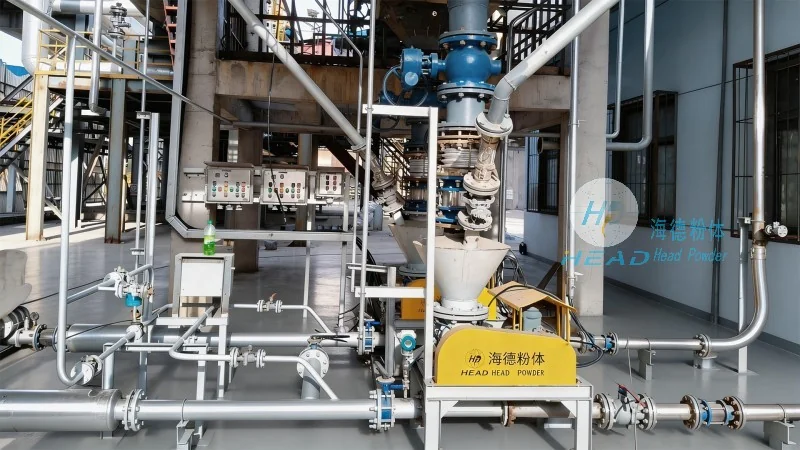
Pipeline design is another essential aspect of system design. The layout of the conveying pipeline must be carefully planned to minimize pressure losses and ensure smooth material flow. Factors such as pipe diameter, material of construction (e.g., stainless steel, plastic, or metal), and the inclusion of bends, elbows, and other fittings all impact the system's performance. For abrasive waste powders, stainless steel or high-grade plastic pipes are recommended to prevent wear and corrosion. The pipe diameter is typically selected based on the required flow rate and the ASR, with larger diameters reducing pressure losses but increasing material costs. Additionally, the inclusion of expansion joints and supports helps to accommodate thermal expansion and maintain structural integrity, especially in systems operating over long distances or in varying environmental conditions.

Equipment selection is also a critical design consideration. The system typically includes several key components, including a material feeder, a conveying line, a separation or collection device, and a fan or blower. The material feeder is responsible for introducing the waste powder into the system at a controlled rate, ensuring consistent flow. Common feeder types include rotary valves, screw feeders, and vibratory feeders. Rotary valves are often preferred for their ability to handle a wide range of materials and provide precise control over the feed rate. Screw feeders are suitable for materials with moderate flowability, while vibratory feeders are effective for sticky or cohesive powders that may require additional agitation to maintain flow. The conveying line connects the feeder to the separation device and may include additional components such as filters or cyclones to remove dust or moisture from the air stream. The separation device, such as a cyclone or baghouse, collects the waste powder from the air and returns it to the process, while the fan or blower provides the necessary pressure or vacuum to drive the material through the system. The choice of separation device depends on the particle size and the required efficiency of dust removal. Cyclones are commonly used for larger particles and provide a high separation efficiency, while baghouses are more effective for fine particles and can achieve very high filtration rates.
System control and monitoring are also integral to the design. Modern pneumatic conveying systems often incorporate advanced control systems that allow for real-time monitoring of parameters such as pressure, flow rate, and temperature. These systems can automatically adjust the air flow or feeder speed to maintain optimal performance, reducing the risk of system failures or inefficiencies. For example, if the pressure in the pipeline drops below a certain threshold, the control system can increase the fan speed or adjust the feeder rate to restore normal operation. Additionally, the inclusion of safety features, such as pressure relief valves and emergency shut-off mechanisms, ensures that the system operates safely and complies with regulatory requirements. These features help to prevent overpressure or vacuum conditions that could damage equipment or pose a safety risk to personnel.