

Operation Process and Working Principle of Polyacrylamide Powder Pneumatic Conveying Line
HeadPowder, a prominent engineering firm based in Shandong, China, specializes in the development and deployment of pneumatic conveying systems for polyacrylamide powder. This article provides a comprehensive overview of the operational processes and fundamental principles that govern the efficient transport of this critical industrial material. The focus is on understanding how these systems function to ensure reliability, efficiency, and safety in various industrial applications.

About HeadPowder Engineering Co., Ltd.
HeadPowder Engineering Co., Ltd. is a professional enterprise dedicated to delivering high-quality engineering solutions for material handling. With a strong presence in Shandong, China, the company has built a reputation for expertise in designing and implementing customized pneumatic conveying systems. The firm’s mission is to provide clients with robust, reliable, and cost-effective solutions that meet the specific demands of their industrial processes. By leveraging advanced technology and years of experience, HeadPowder ensures that each system is tailored to optimize performance and durability.

Working Principle of Pneumatic Conveying Systems
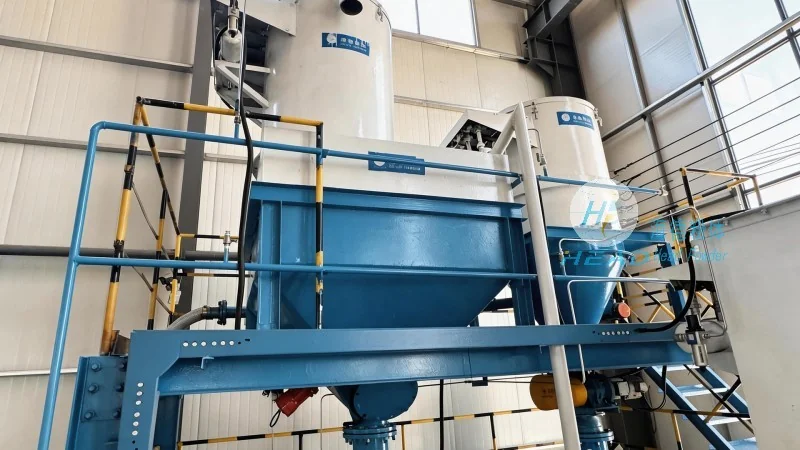
The pneumatic conveying system for polyacrylamide powder operates on the principle of using air as a medium to transport solid particles. The system typically comprises several key components: a hopper for material storage, a rotary valve for controlled discharge, a conveying pipeline, and a receiver for material collection. Compressed air is introduced into the system, creating a pressure differential that generates sufficient velocity to propel the powder through the pipeline. This process relies on fluid dynamics, where the air flow provides the necessary force to overcome gravitational and frictional forces acting on the powder particles. The system may also include auxiliary components such as filters, cyclones, or dust collectors to maintain air quality and ensure clean operation.

Operation Process of the Pneumatic Conveying Line
The operation of a polyacrylamide powder pneumatic conveying line involves a series of coordinated steps. Initially, the polyacrylamide powder is fed into the hopper from the storage tank. The rotary valve then regulates the flow rate of the powder into the conveying pipeline, ensuring a consistent and controlled discharge. Simultaneously, compressed air is supplied to the system, creating a pressure that drives the powder forward through the pipeline. The powder travels under the influence of the air flow to the receiver, where it is collected. The system may incorporate additional features like airlocks or check valves to prevent backflow and maintain system integrity. Throughout the process, monitoring equipment tracks parameters such as pressure, flow rate, and temperature to ensure optimal performance and detect any potential issues.
Key Considerations for Efficient Operation
Several factors contribute to the efficient and reliable operation of a polyacrylamide powder pneumatic conveying line. First, the design of the system must account for the properties of the powder, including its particle size, density, and moisture content. These characteristics influence the air velocity required for effective transport. Additionally, the pipeline layout and diameter must be optimized to minimize pressure drop and energy consumption. Regular maintenance of components such as the rotary valve, air compressor, and filters is crucial to prevent system downtime and ensure long-term performance. Proper training of operators on system operation and troubleshooting is also essential for maintaining the system's efficiency and safety.
Applications and Benefits
Polyacrylamide powder pneumatic conveying lines are widely used in various industrial sectors, including water treatment, paper manufacturing, mining, and chemical processing. The primary benefits of these systems include improved safety by eliminating manual handling of powders, enhanced efficiency through automated material transport, and reduced material loss due to minimal contact with the environment. The systems also offer flexibility in terms of layout and integration with existing industrial processes. By providing a reliable and efficient means of transporting polyacrylamide powder, these systems contribute to overall operational productivity and cost-effectiveness.