

Introduction to Chromium(III) Oxide Pneumatic Conveying Equipment and Its Structural Principles
This article provides an overview of the chromium(III) oxide pneumatic conveying equipment, focusing on its structural design and operational principles. The equipment is engineered to efficiently transport fine powders, such as chromium(III) oxide, in industrial settings. By leveraging pneumatic technology, it ensures reliable and low-loss material handling, which is crucial for maintaining product quality and operational efficiency in various manufacturing processes.

Company Profile: Shandong HeadPowder Engineering Co., Ltd.
HeadPowder, the manufacturer of this advanced pneumatic conveying system, is a leading enterprise based in Shandong, China. With a strong commitment to innovation and quality, the company specializes in the design, development, and production of powder handling equipment. HeadPowder's expertise in material processing and pneumatic technology enables the creation of robust solutions tailored to the specific needs of the chemical, metallurgical, and pharmaceutical industries. The company's operational base in Shandong provides a strategic advantage in terms of access to raw materials and manufacturing capabilities, ensuring consistent supply and support for clients worldwide.
Structural Overview of the Pneumatic Conveyer
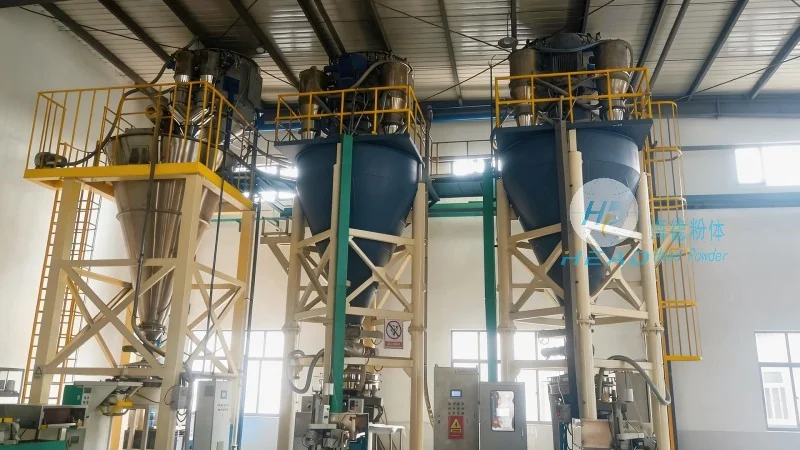
The chromium(III) oxide pneumatic conveying equipment consists of several key components that work in tandem to achieve efficient material transport. The primary structure includes a hopper for material storage, a rotary valve or feeder for controlled discharge, a high-pressure air compressor or vacuum pump for generating the conveying air, a network of stainless steel or corrosion-resistant pipes to guide the material flow, a cyclone separator or filter to separate the conveyed powder from the air stream, and a dust collection system to ensure environmental compliance. Each component is designed to withstand the chemical and physical properties of chromium(III) oxide, ensuring durability and long-term performance.

Working Principle of the Equipment
The operation of the pneumatic conveyer follows a well-defined process. Initially, the chromium(III) oxide powder is fed into the hopper from a bulk storage or processing unit. The rotary valve then regulates the flow of powder into the conveying line, ensuring a consistent feed rate. Simultaneously, the air compressor generates high-pressure air, which is introduced into the pipeline. The air stream, moving at a velocity sufficient to entrain the powder particles, creates a slurry of powder and air. This mixture travels through the pipeline to the destination point, such as a storage silo or processing reactor. At the receiving end, a cyclone separator or filter separates the powder from the air, allowing the powder to be discharged while the air is either recirculated or vented to the atmosphere. The system operates under either positive pressure (where air is forced through the system) or negative pressure (where air is drawn out), depending on the specific application requirements and the layout of the conveying network.
Key Features and Technical Specifications
The chromium(III) oxide pneumatic conveying equipment from HeadPowder is characterized by several key features that enhance its performance and reliability. These include high conveying efficiency, typically achieving a material-to-air ratio of 1:10 to 1:20, which minimizes energy consumption and reduces the volume of air required for transport. The equipment is designed with corrosion-resistant materials, such as stainless steel or special alloys, to handle the chemical properties of chromium(III) oxide and prevent material degradation or equipment failure. Additionally, the system incorporates advanced control mechanisms, such as variable speed drives and pressure sensors, to optimize operation and prevent overloading or underloading conditions. Technical specifications include a maximum conveying distance of up to 100 meters, a maximum particle size of 200 microns, and a minimum air velocity of 20 m/s to ensure proper particle suspension. The equipment also complies with international safety and environmental standards, ensuring safe operation and minimal environmental impact.
Application Scenarios and Operational Benefits
The chromium(III) oxide pneumatic conveying equipment is widely used in various industrial applications where the handling of fine powders is critical. Common applications include the transportation of chromium(III) oxide in chemical manufacturing plants, where it is used as a pigment or catalyst. In metallurgical processes, the equipment facilitates the transfer of chromium compounds between reactors and storage tanks. The system is also applicable in pharmaceutical and food processing industries, where the need for clean, dust-free handling is paramount. The operational benefits of using this equipment include reduced labor costs due to automated material handling, minimized product loss and contamination, improved safety by eliminating manual handling of powders, and enhanced process control through precise flow regulation. Furthermore, the equipment's compact design and modular construction allow for easy integration into existing production lines, reducing installation time and costs.