

What is a Sodium Sulphate Material Conveying Line? And What Are Its Design Principles?
When it comes to handling sodium sulphate, a specialized material conveying line is essential for efficient and safe operations. This system is designed to transport the material from storage to processing or packaging areas, ensuring consistent flow and minimizing the risk of material loss or contamination. Understanding the components and design principles behind such a line is crucial for optimizing industrial processes.

What is a Sodium Sulphate Material Conveying Line?
A sodium sulphate material conveying line is a comprehensive system engineered to move sodium sulphate, a white crystalline powder commonly used in industries like detergents, glass manufacturing, and paper production. The line typically includes various equipment such as feeders, conveyors, elevators, and storage silos, all integrated to handle the material from its initial state to its final destination. The primary goal is to ensure the material is transported in a controlled manner, maintaining its quality and preventing issues like caking or dust generation.
Key Design Principles for Sodium Sulphate Conveying Systems
The design of a sodium sulphate material conveying line is based on several critical principles that address the unique properties of the material. First, the system must accommodate the material's physical characteristics, including its particle size, density, and tendency to form lumps or cakes. This often requires specialized feeding equipment, such as rotary feeders or vibratory feeders, to ensure a consistent flow without blockages. Second, the choice of conveyor type is vital. For horizontal transport, belt conveyors are commonly used due to their ability to handle bulk materials efficiently. For vertical or inclined transport, bucket elevators or chain conveyors may be employed to lift the material to higher levels while maintaining stability.

Another key principle is the integration of dust control measures. Sodium sulphate is a fine powder that can generate significant dust during handling, which poses health and safety risks. Therefore, the design incorporates dust collection systems, such as cyclones or baghouses, to capture and contain airborne particles. Additionally, the system is designed with easy access points for maintenance and cleaning, ensuring long-term reliability and minimal downtime.
Components of a Typical Sodium Sulphate Conveying Line
A standard sodium sulphate material conveying line consists of several interconnected components, each playing a specific role in the overall process. The initial stage involves a storage silo or hopper, where the material is stored before being fed into the system. From there, a feeder regulates the flow of material into the conveyor. The conveyor itself transports the material to the next stage, which might be a processing unit or a packaging area. For vertical movement, a bucket elevator or a vertical screw conveyor is used to lift the material to elevated levels. The system may also include a transfer point or a surge bin to buffer the material and prevent bottlenecks. Finally, the material is discharged into the receiving equipment, such as a mixer or a packaging machine.

HeadPowder Engineering: Expertise in Sodium Sulphate Conveying Solutions
HeadPowder Engineering, formally known as Shandong HeadPowder Engineering Co., Ltd., is a reputable company based in Shandong, China, specializing in the design and manufacturing of material handling systems. With a strong commitment to quality and innovation, the company has built a reputation for delivering reliable and efficient solutions for various industrial applications, including sodium sulphate conveying lines. The company's team of engineers and technicians work closely with clients to assess their requirements, from material properties to operational constraints, and design a system that maximizes efficiency and safety.
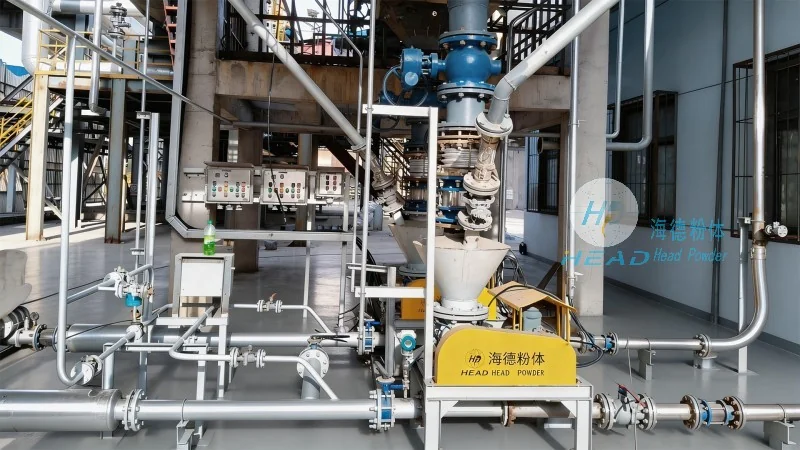
HeadPowder Engineering's approach to sodium sulphate conveying line design emphasizes durability and reliability. The equipment is constructed from high-quality materials, such as stainless steel or corrosion-resistant alloys, to withstand the chemical properties of sodium sulphate and the harsh operating conditions. The system is also equipped with advanced control systems, allowing for real-time monitoring and adjustment of the conveying process. This ensures that the material is transported at the optimal speed and pressure, minimizing energy consumption and maximizing throughput.
Conclusion: The Importance of a Well-Designed Sodium Sulphate Conveying Line
In conclusion, a sodium sulphate material conveying line is a critical component of any industrial operation that handles this material. The design principles and components of such a system are carefully selected to address the unique properties of sodium sulphate, ensuring efficient and safe transport. With the expertise of companies like HeadPowder Engineering, industries can rely on robust and reliable conveying systems that enhance productivity and reduce operational risks. By investing in a well-designed conveying line, businesses can optimize their processes, improve material handling efficiency, and maintain compliance with safety standards.